
Introduction
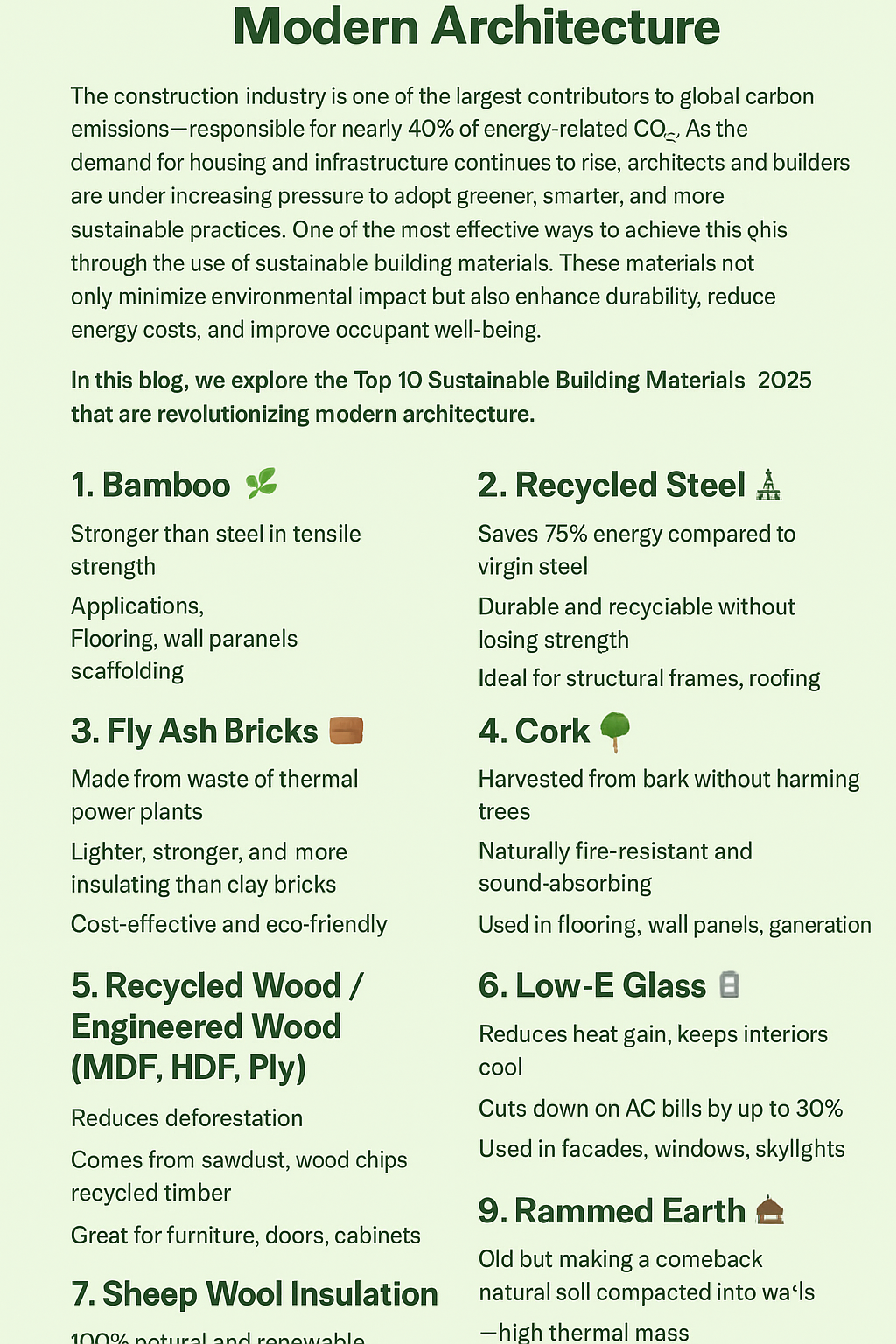
The construction industry is one of the biggest contributors to climate change, responsible for nearly 40% of global carbon emissions. With rising concerns about environmental impact and energy efficiency, architects and builders are under pressure to adopt greener practices.
The solution lies in sustainable building materials. These eco-friendly construction options not only reduce the carbon footprint but also lower costs and create healthier, more durable spaces.
Here are the top 10 sustainable materials in 2025 that are reshaping modern architecture.
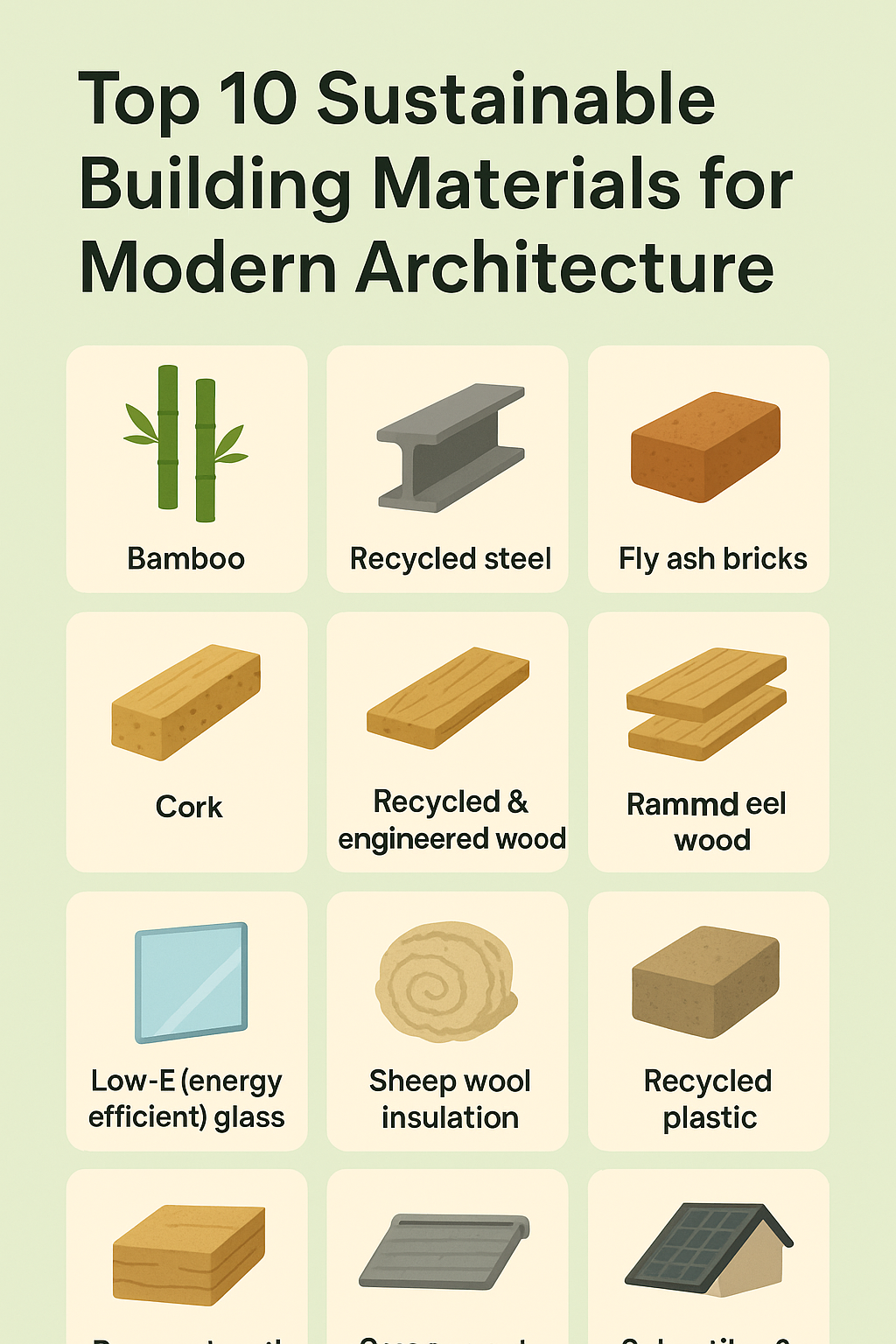
1. Bamboo – The Strong & Renewable Resource
- Fastest-growing renewable material that regenerates in just 3–5 years.
- Stronger than steel in tensile strength, making it ideal for structural applications.
- Used in flooring, wall panels, furniture, and scaffolding.
👉 Why architects love it: Lightweight, durable, and aesthetic for both interiors and exteriors.
2. Recycled Steel – Durable & Energy Efficient
- Saves up to 75% energy compared to producing virgin steel.
- 100% recyclable without losing strength or quality.
- Commonly used in structural frames, roofing sheets, and high-rise construction.
👉 Best choice for projects that require strength with reduced environmental impact.
3. Fly Ash Bricks – Turning Waste into Walls
- Manufactured from waste generated in thermal power plants.
- Stronger, lighter, and more insulating than conventional clay bricks.
- More cost-effective and reduces dependency on natural clay.
👉 A smart choice for affordable housing and sustainable developments.
4. Cork – Flexible, Fire-Resistant & Eco-Friendly
- Harvested from the bark of cork oak trees without cutting them down.
- Naturally fire-resistant, sound-absorbing, and thermal insulating.
- Popular in flooring, wall panels, and insulation boards.
👉 Adds a warm and natural aesthetic while being sustainable.
5. Recycled & Engineered Wood (MDF, HDF, Plywood)
- Reduces deforestation by reusing wood waste and sawdust.
- Strong engineered wood boards are widely used in doors, cabinets, and furniture.
- Eco-friendly alternative to solid wood with high design flexibility.
👉 Keeps interiors stylish while reducing environmental damage.
6. Low-E Glass (Energy-Efficient Glass)
- Coated to minimize heat gain while allowing natural light indoors.
- Can cut air-conditioning costs by up to 30%.
- Used in windows, facades, skylights, and curtain walls.
👉 Essential for energy-efficient modern architecture and green-certified buildings.
7. Sheep Wool Insulation – Natural & Healthy
- 100% renewable and biodegradable insulation material.
- Provides excellent thermal and acoustic insulation.
- Safer and healthier than fiberglass or synthetic insulation.
👉 Perfect for eco-conscious homeowners aiming for healthy indoor air quality.
8. Recycled Plastic – From Waste to Walls
- Made by converting plastic waste into panels, boards, and tiles.
- Durable, waterproof, and termite-resistant.
- Even used in 3D-printed houses and prefab construction systems.
👉 Solves the plastic waste problem while creating innovative building products.
9. Rammed Earth – Ancient Yet Modern
- Made by compacting natural soil into thick, strong walls.
- Offers high thermal mass, keeping interiors cool in summer and warm in winter.
- Extremely sustainable with a rustic, earthy aesthetic.
👉 Making a comeback in modern eco-homes and experimental architecture.
10. Solar Tiles & Smart Roofing – Energy-Generating Material
- Works as both roofing material and solar energy generator.
- Sleeker, more aesthetic alternative to bulky solar panels.
- Growing adoption in residential and commercial green buildings.
👉 Future-forward choice for architects combining design + energy efficiency.
Conclusion
Switching to sustainable building materials is no longer just a trend—it’s a necessity. From bamboo and fly ash bricks to solar tiles and recycled plastic, these green materials help reduce costs, improve energy efficiency, and ensure a healthier planet.
🌱 At AL Design Studio, we believe in creating eco-friendly architecture that blends beauty with sustainability.
👉 Looking to integrate sustainable materials in your next project? Contact AL Design Studio today for eco-friendly design solutions.
[…] “If you’re looking for a list of the best eco-friendly construction materials to start with, don’t miss our guide on Top 10 Sustainable Building Materials for Modern Architecture.” […]
Your writing speaks to the soul. It doesn’t just touch the intellect; it resonates on a deeper level, making the reader pause and reconsider the way they see the world. I find myself thinking about your words long after I’ve finished reading, and I know this is a piece I’ll return to again and again.