
Introduction
The construction industry contributes nearly 40% of global carbon emissions. For architects and designers, this creates both a challenge and an opportunity: how do we design spaces that are aesthetic, functional, and eco-friendly?
In this blog, we’ll look at real-life case studies of sustainable buildings and then break them down into practical design strategies you can apply to your own projects.
Case Study 1: The Pearl Academy, Jaipur (India)
- Architects: Morphogenesis
- Sustainable Highlight: Passive cooling through jaali walls & step-wells.
- Impact: Reduced energy consumption by nearly 20–25% compared to conventional campuses.
How You Can Apply It:
- Use local climate-responsive design like perforated facades, courtyards, and water features.
- Incorporate vernacular elements into modern forms for both performance and aesthetics.
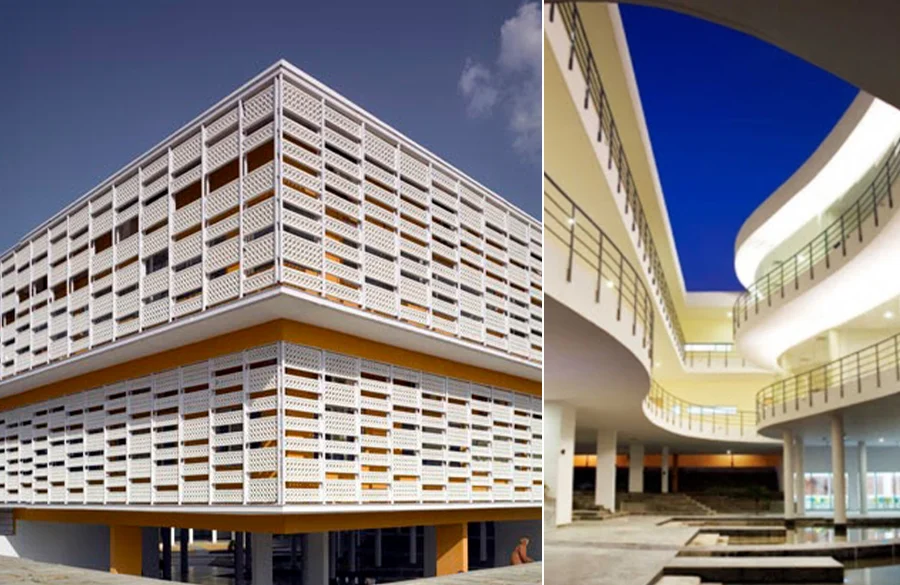

Image credit: Bullitt Center
Case Study 2: Bullitt Center, Seattle (USA)
- Architects: Miller Hull Partnership
- Sustainable Highlight: Known as the “Greenest Commercial Building in the World”.
- Impact: Net-zero energy + water, rooftop solar provides 100% power.
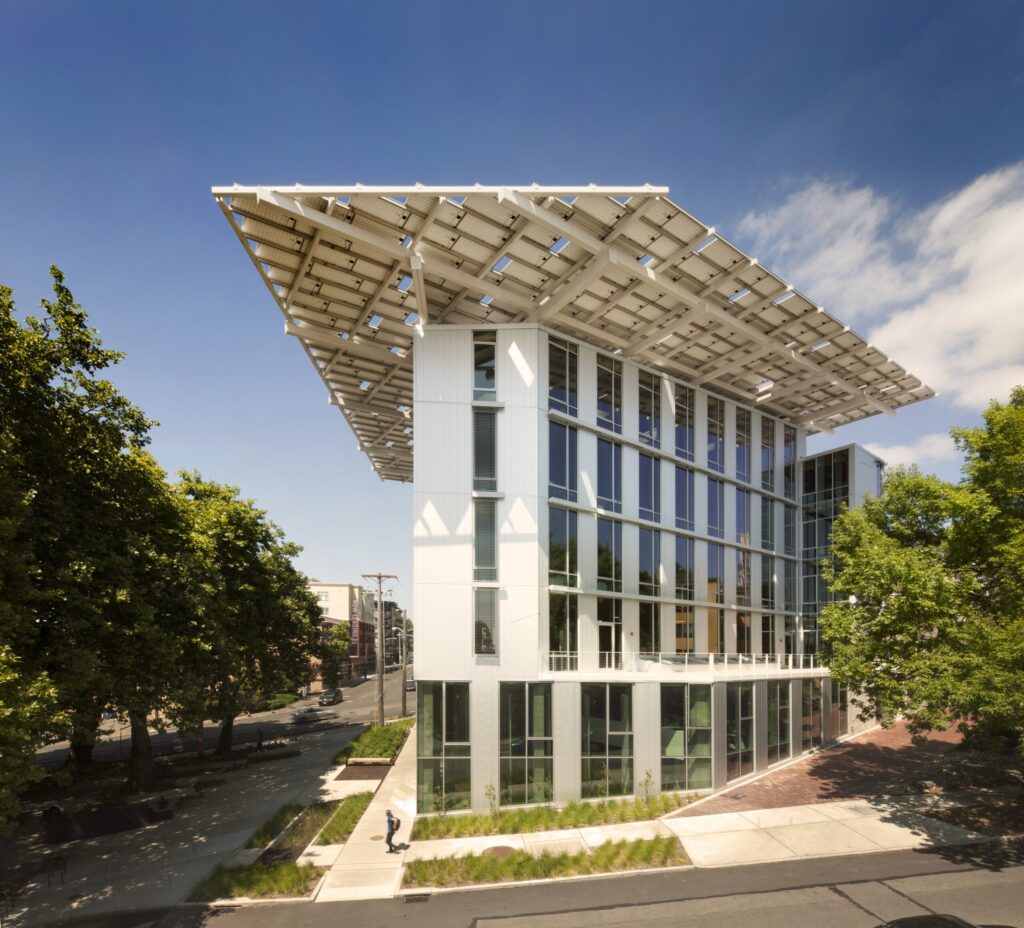
Image credit: Bullitt Center
How You Can Apply It:
- Integrate solar panels into your designs, even in smaller residential projects.
- Use rainwater harvesting and greywater recycling systems for long-term savings.
Case Study 3: Infosys Campus, Mysuru (India)
- Architects: Hafeez Contractor & Team
- Sustainable Highlight: India’s largest corporate campus is designed with energy-efficient systems.
- Impact: Achieved LEED Platinum Certification.
How You Can Apply It:
- Focus on energy-efficient HVAC systems and daylighting strategies.
- Use smart automation (motion sensors, zoned cooling) to reduce unnecessary energy use.
How-To: Applying Sustainable Design in Your Own Projects
1. Choose Green Materials
- Bamboo, recycled steel, fly ash bricks, rammed earth.
- Locally sourced materials to cut transportation emissions.
2. Design for Climate
- Cross-ventilation, thermal mass walls, and shaded windows.
- Courtyards + double-skin facades to regulate heat.
3. Harness Natural Energy
- Solar PV, solar water heaters.
- Wind and natural cooling for reduced HVAC loads.
4. Integrate Smart Systems
- LED lighting, motion sensors, and building automation.
- Smart irrigation for landscaping.
5. Think Beyond the Building
- Rainwater harvesting, STP (sewage treatment plant), and on-site composting.
- Green roofs and vertical gardens to improve air quality.
Conclusion
Sustainable architecture is no longer an option—it’s a necessity. By learning from global case studies and applying practical strategies, architects can design buildings that are beautiful, functional, and future-ready.
At AL Design Studios, we are committed to creating spaces that combine modern design with sustainability—from smart façades to eco-friendly interiors.
“If you’re looking for a list of the best eco-friendly construction materials to start with, don’t miss our guide on Top 10 Sustainable Building Materials for Modern Architecture.”
Image Credits:
Bullitt Center, Seattle – Bullitt Center
Pearl Academy of Fashion, Jaipur – Morphogenesis Architects / Archestudy
A really good blog and me back again.